About the Day2Day Environment Project
This is an ongoing project that includes data of healthy subjects between 18 and 50 years old. They are screened for the following criteria: MRI compatibility, no psychiatric and neurological disorder, no current or past addiction to alcohol and/or drugs, no (possible) pregnancy, and no previous brain and/or heart surgery.
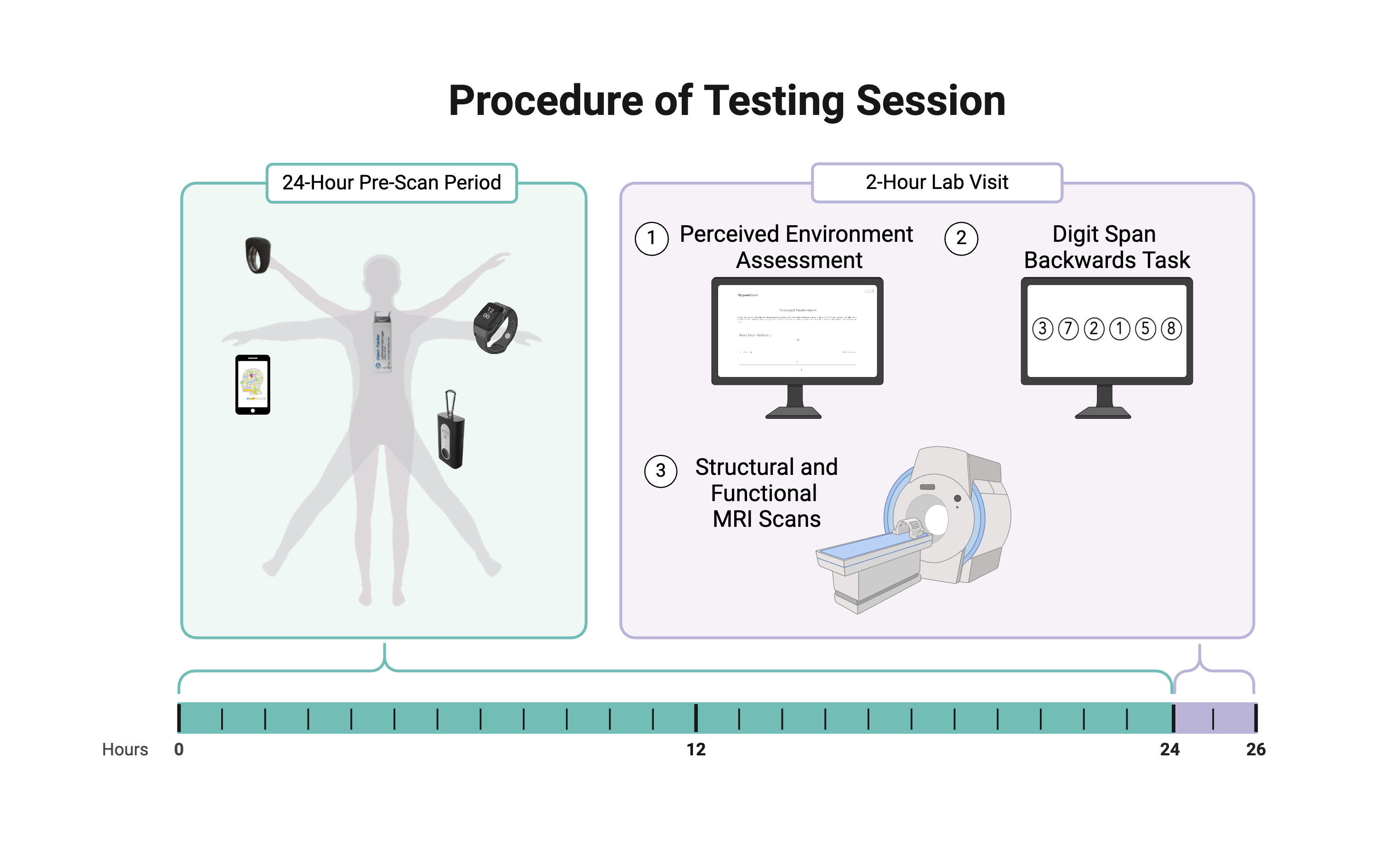
Over three to four months, each participant completes 25 testing sessions (~2 sessions per week, depending on availability of the participant and the MRI scanner), including a 24-hour pre-scan period and a lab visit with both structural and functional MRI scans. For the pre-scan period, participants are instructed to activate all devices and applications at least 24 hours before each lab visit to collect environmental, physiological, and behavioral data during the 24 hours before MRI acquisition. The set of devices and applications include GPS tracking on a provided phone, a smart watch monitoring relevant health-related parameters and sleep, devices for assessing indoor and outdoor air quality, a smart ring to track electrodermal activity, a light tracker to measure a number of light parameters, and an app for ecological momentary assessment (EMA) including cognition and affect. If consent is provided, we also collect GPS data throughout the duration of the study by installing a custom-made app on the participants’ personal phones. The functions of the devices and apps are described in more detail in the following chapters (Environmental data, Behavioral data, Physiological data). During the pre-scan period, participants receive notifications on the provided study phone approximately every two hours to complete short EMA questionnaires. These questionnaires include a 2-minute working memory updating task, questions about stress, affect, and rumination, and prompts to report their subjective perceptions of their current environment. Each lab visit following the pre-scan period includes a questionnaire about the perceived environment and emotions, a memory task, and MRI scanning.
Subjects are compensated upon successful completion of the study.
The figure illustrates the study procedure including the pre-scan period and the lab visit.
Availability of data and materials
Due to European legislation, the data will not be stored in public repositories. However, it can be shared with the international research community for formal collaborations upon reasonable request, provided that adequate data transfer agreements compliant with German and European law are in place. For collaboration and data requests, please contact Prof. Dr. Simone Kühn (kuehn@mpib-berlin.mpg.de).
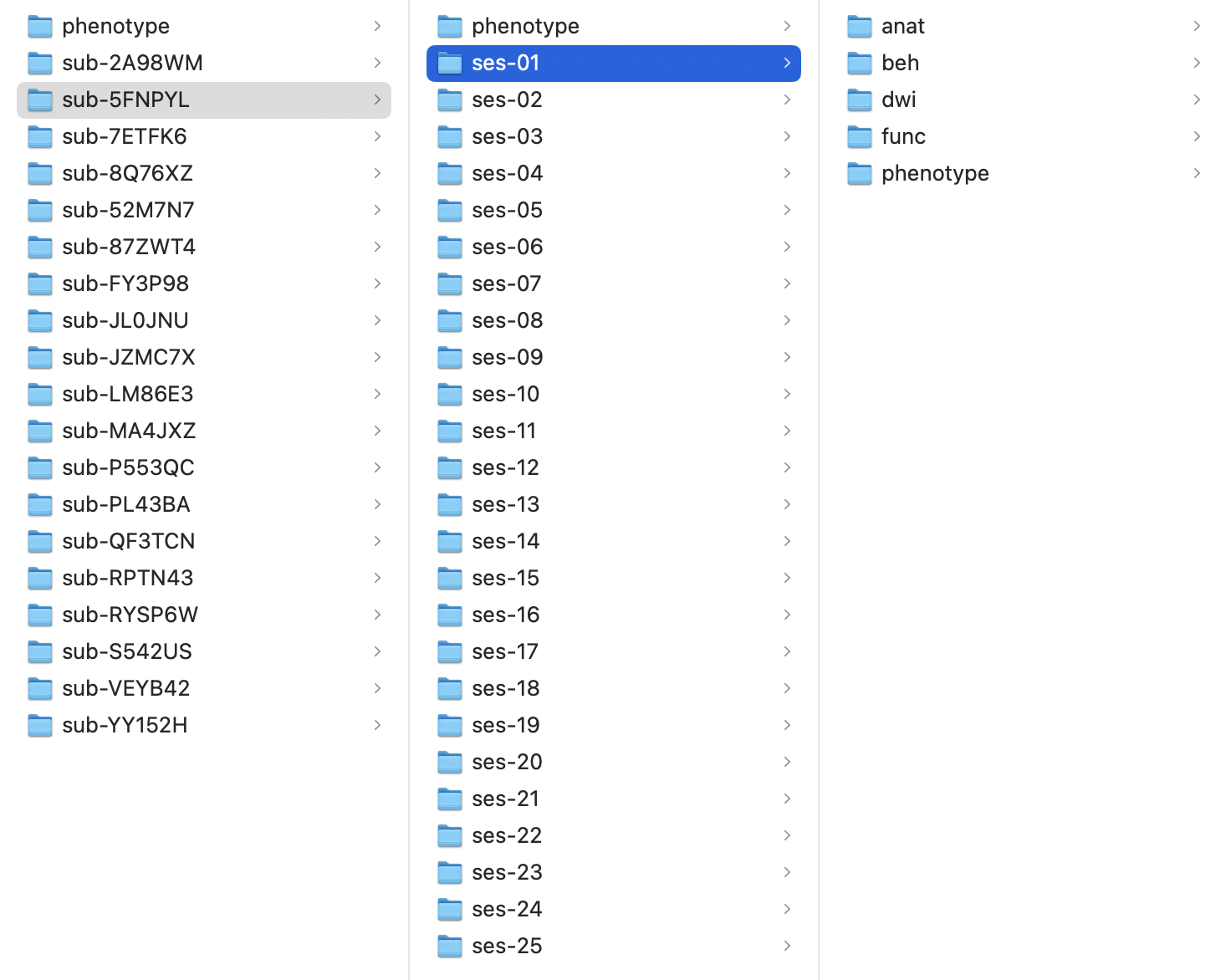
The dataset is organized in accordance with the Brain Imaging Data Structure (BIDS).
Ethics statement
The study was approved by the Local Psychological Ethical Committee at the Center for Psychosocial Medicine at University Medical Center Hamburg-Eppendorf in Hamburg, Germany (LPEK-0185). We obtained written informed consent from all participants and they received monetary compensation for the participation in the study.
Acknowledgement
This work was conducted at the Max Planck Dahlem Campus of Cognition (MPDCC) of the Max Planck Institute for Human Development, Berlin, Germany.
Funded by the Max Planck Society and the European Union (ERC-2022-CoG-BrainScape-101086188). Views and opinions expressed are however those of the authors only and do not necessarily reflect those of the European Union or the European Research Council Executive Agency (ERCEA). Neither the European Union nor the granting authority can be held responsible for them.